Medi-Cal cuts to impact tens of thousands on Central Coast
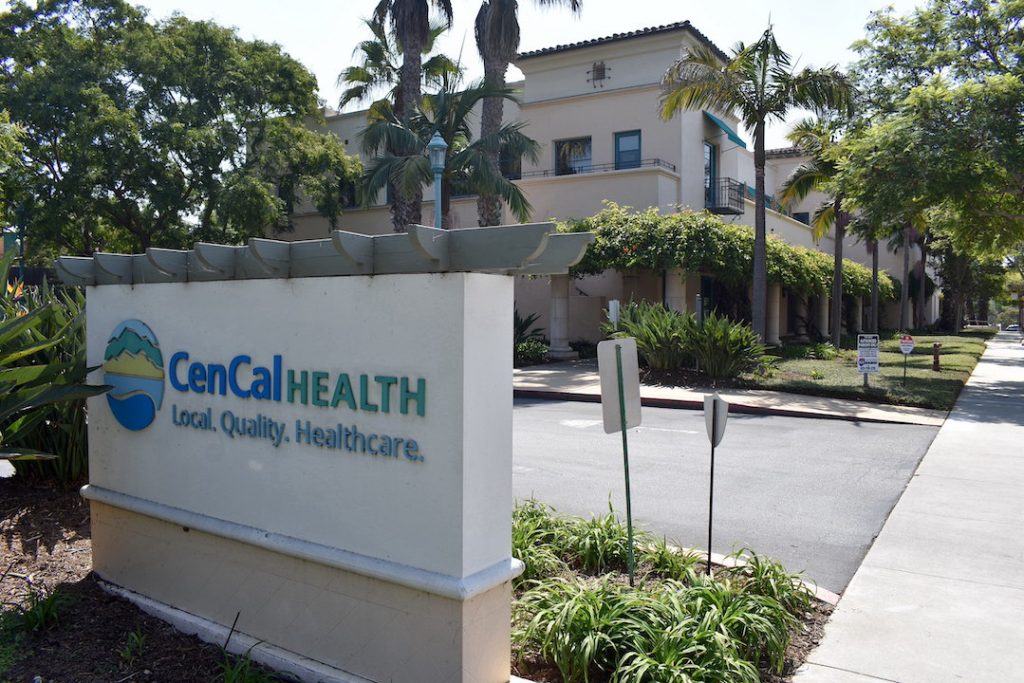
Upwards of 30,000 people on the Central Coast could lose their health insurance due to $1 trillion in cuts to Medicaid under President Donald Trump’s spending and tax bill, regional health care and public officials say.
Under the bill signed into law July 4, able-bodied adults must work, participate in job training, volunteer, or enroll in school for at least 80 hours a month to qualify for or maintain Medicaid benefits.
The work requirements begin Dec. 31, 2026. States would have the option to start earlier.
The $1 trillion Medicaid funding cuts will be phased in starting in 2028.
“Based on the final bill, we estimate that over 30,000 people in Santa Barbara and San Luis Obispo counties will lose health insurance,” Marina Owen, president and CEO of CenCal Health, told the Business Times July 14.
“That’s more than the size of the UCSB student body,” she said.
Tens of thousands more are projected to lose their Medicaid benefits in Ventura County, officials say.
Medicaid, known as Medi-Cal in California, is a joint federal/state program that gives health coverage to some peoplewith limited income and resources.
Owen said that while the vast majority of able-bodied Medicaid recipients in the tri-county region work, those who don’t include people taking full-time care of elderly parents or disabled children in the home, and those in addiction treatment or other such programs.
Too occupied to work a traditional 80 hours a month, under the bill, they would lose their coverage, she said.
About 242,000 people in Santa Barbara and San Luis Obispo counties are enrolled in Medicaid, which is administered there by CenCal Health.
That’s about 33% of the population of the two counties.
With Ventura County factored in, 484,000 people in the tri-county region are covered by Medicaid.
Medicaid is primarily administered in Ventura County by Gold Coast Health Plan.
CenCal Health and Gold Coast Health are part of the Central Coast Health Coalition, a group of more than 20 tri-county government, provider, and community organizations.
The group is dedicated to uniting healthcare, business, and community partners to protect access to critical health and social services.
Other members include Cottage Health, Dignity Health, Lompoc Valley Medical Center, VNA Health, Santa Barbara and San Luis Obispo counties, Good Samaritan Shelter and American Indian Health & Services, Inc.
Prior to the July 3 passage of the so-called “Big Beautiful Bill,” the coalition had urged Congress to protect Medicaid benefits.
“We are writing today, in partnership with Ventura County, to urge you to protect Medicaid (Medi-Cal in California) and the access to care that it ensures for over 484,000 people in our tri-county region,” the coalition wrote in a July 1 letter to House of Representatives leaders.
“The coalition remains deeply concerned about potential Medicaid impacts which would destabilize the healthcare delivery system in our area, significantly impacting hospitals, providers, and small businesses,” the coalition wrote.
Hospitals in the region serve a disproportionately high number of Medicaid patients and are among the largest employers in their communities, the group said.
“Funding cuts could force them to reduce services, eliminate critical programs—such as maternal and child health services and 24/7 emergency care—or even lay off staff,” according to the coalition.
Some facilities may even need to close, forcing thousands of people to travel hundreds of miles to access critical care, the coalition wrote.
Under the bill’s proposed language, the tri-county region would lose $638 million in revenue over 10 years, according to the group.
In a statement, a spokesperson for Santa Barbara’s Sansum Clinic, now part of Sutter Health, noted that Medi-Cal represents a little less than 9% of the clinic’s volume and is spread across all the departments, including pediatrics, OB/GYN, oncology, surgery and more.
“If funding were to be decreased, we would likely feel that proportionally to our volume,” the spokesperson said.
“Even if funding is cut for an individual patient, many of those patients would still need the care, so the loss of funding in some cases would mean we would still be providing the care, albeit with no reimbursement,” the spokesperson said.
Owen said that the implementation of the parts of the bill that apply to the Medicaid work requirement is still to be determined.
“We’re going to be watching what is and what is not allowed,” she said.
Volunteering or work training programs, for instance, could qualify as work, she said.
“We’re just not sure at this juncture,” she said. “But many are worried that implementation may put up some administrative barriers for them.”
email: [email protected]